
LIANYUNGANG, JIANGSU, CHINA, August 20, 2026 /EINPresswire.com/ — High-tech production lines in semiconductor fabrication, photovoltaic cell manufacturing, and high-precision optical laboratory research face continuous pressure to maintain tight operational tolerances. In semiconductor diffusion furnaces and chemical vapor deposition systems, even minor dimensional deviations in quartz glass components can cause vacuum leaks or thermal field instability. Procurement departments often evaluate potential vendor proposals based on initial line-item unit quotes. However, standard suppliers frequently attract buyers with lower initial pricing while masking significant hidden downstream costs. Sourcing engineers increasingly realize that the true cost of high-purity quartz parts does not reside in the initial quotation, but in the unseen secondary grinding, fitting adjustments, and scrap losses that occur between the initial engineering drawing and final equipment assembly. Evaluating China professional precision quartz glass machining solutions requires looking beyond basic component costs and examining specific operational metrics, including fabrication tolerance capabilities, material verification practices, and thermal stress relief procedures.
Dimensional Accuracy and Complex Structural Fabrication Capabilities
Standard quartz component fabricators typically operate within basic machining boundaries. Most generic suppliers rely on manual cutting wheels and basic grinding setups that limit dimensional tolerance control to approximately plus or minus 0.5 millimeters. These standard vendors usually limit their production scope to straight cylindrical cuts, simple edge grinding, and standard tube trimming. When an engineering design requires intricate features such as micro-diameter drilling, tight-pitch threading, complex 3D curved surfaces, or precision chamfering, basic suppliers often struggle to maintain structural integrity. The resulting components frequently exhibit micro-cracks along cut edges or internal surface roughness that disrupts uniform heat distribution during high-temperature thermal processing.
In contrast, specialized technical processors approach quartz fabrication through integrated computer numerical control systems and multi-axis diamond machining centers. Lianyungang Southeast Quartz Products Co.,Ltd. utilizes raw materials sourced from high-purity quartz deposits in Donghai County to fabricate customized structural components according to strict technical drawings. The company maintains precise tolerance bands ranging from plus or minus 0.05 millimeters to plus or minus 0.5 millimeters depending on component geometry and application requirements. Rather than limiting operations to basic tube trimming, Southeast Quartz executes complex multi-step machining sequences on single workpieces. These operations include precision flange end forming, multi-angle internal drilling, tight-radius chamfering, and optical-grade double-sided surface polishing.
Complex mechanical features directly influence component performance inside chemical reactors and vacuum chambers. For instance, high-purity quartz furnace tubes, bell jars, and boat carriers must maintain tight dimensional consistency to ensure complete gas sealing and uniform wafer spacing. Standard suppliers often produce quartz boats with slight slot misalignment, forcing assembly technicians to manually rework parts on the factory floor or accept higher wafer breakage rates. By applying precision quartz glass machining solutions directly at the manufacturing facility, Lianyungang Southeast Quartz Products Co.,Ltd. eliminates post-delivery modification needs. The resulting components fit directly into processing equipment, preventing operational downtime and ensuring stable performance under severe thermal and vacuum conditions.
Verification Documentation and Material Traceability
Receiving raw materials without comprehensive quality documentation poses a substantial operational risk to high-tech manufacturing facilities. Standard quartz suppliers typically ship orders accompanied by nothing more than a basic packing slip and a generic delivery note. These suppliers rarely conduct batch-level spectroscopic analysis or dimensional verification on finished parts. As a consequence, receiving departments must either install unverified components directly into sensitive production environments or establish internal secondary testing protocols. Secondary material testing requires dedicated laboratory equipment, specialized technical personnel, and additional processing days, effectively increasing the total cost of ownership for every incoming batch.
To eliminate receiving uncertainties, leading technical manufacturers implement structured verification frameworks that accompany every production shipment. Lianyungang Southeast Quartz Products Co.,Ltd. issues a comprehensive documentation package alongside each delivered batch. This verification package includes a detailed material chemical composition report that verifies high silicon dioxide purity levels and tracks trace element impurities down to parts-per-million thresholds. In addition, Southeast Quartz provides full dimensional inspection records alongside specific performance test documentation, including helium leak detection reports, pressure resistance test data, and material purity certificates.
Complete factory documentation transforms material receiving from a risk-prone inspection bottleneck into a streamlined operational step. Sourcing engineers can trace every high-purity fused quartz tube, instrument, or tri-acid purification system directly back to raw material batch records. When a component enters service inside a semiconductor etching chamber or high-purity chemical processing line, technicians hold verified documentation confirming structural soundness and vacuum tightness. By integrating full documentation into the manufacturing process, Southeast Quartz eliminates the need for secondary customer testing, accelerates installation timelines, and provides complete material traceability across demanding production environments.
Stress Relief Annealing and Long-Term Thermal Stability
Thermal processing represents one of the most critical yet frequently overlooked phases in quartz component manufacturing. Deep mechanical operations such as diamond drilling, edge grinding, and surface polishing introduce significant mechanical stress into the amorphous structure of quartz glass. Standard suppliers frequently accelerate production cycles by skipping dedicated post-machining annealing treatments or shortening thermal soaking schedules. While a non-annealed quartz component may appear visually flawless upon delivery, internal residual stress remains locked inside the material matrix.
When exposed to fluctuating temperatures, high-power laser irradiation, or thermal shock inside processing equipment, un-annealed quartz components exhibit severe operational defects. In precision optical systems and laser cavities, internal stress creates stress birefringence, which distorts light transmission and compromises optical measurement accuracy. In thermal processing equipment operating at temperatures up to 1200 degrees Celsius, un-annealed quartz components experience uneven thermal expansion. This structural imbalance leads to gradual mechanical warping, localized cracking, or catastrophic fracture during routine production cycles. Standard suppliers often attribute such thermal failures to operational misuse rather than inadequate thermal processing during manufacturing.
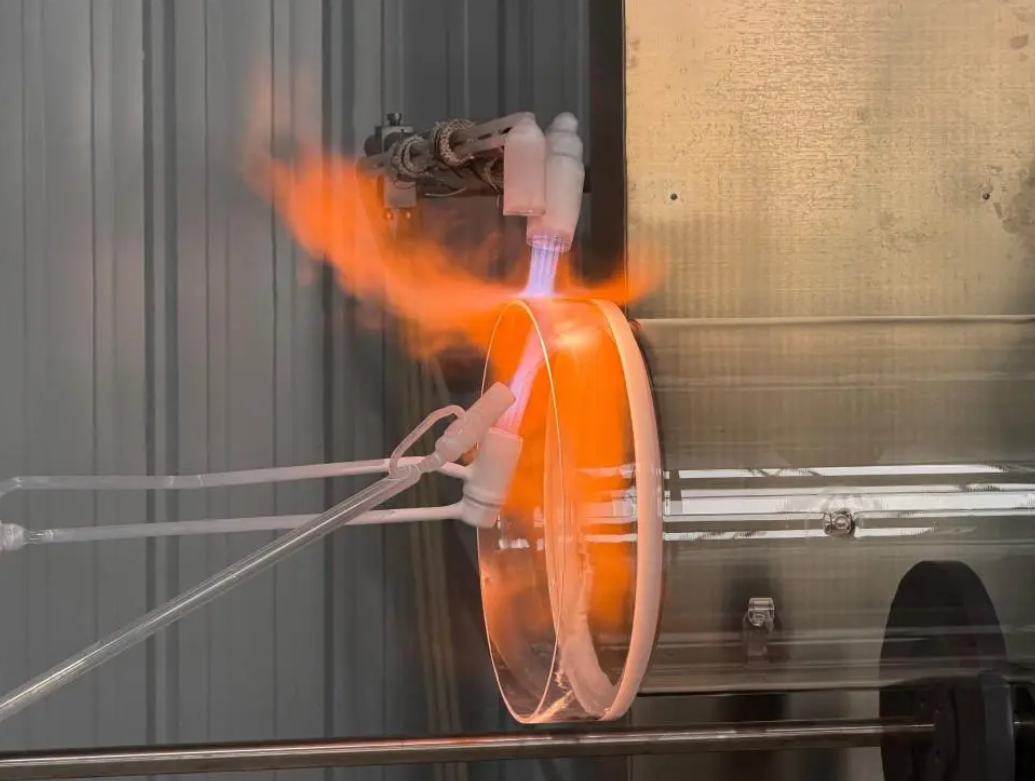
To guarantee structural stability under high-temperature working conditions, specialized processors enforce strict thermal stress-relief protocols following all mechanical operations. Lianyungang Southeast Quartz Products Co.,Ltd. integrates specialized multi-stage annealing cycles into the standard fabrication workflow. The process gradually raises component temperatures to release internal mechanical tension introduced during cutting and polishing, followed by carefully controlled cooling phases. This precise thermal treatment stabilizes the molecular structure, eliminating residual stress fields. Consequently, precision quartz glass machining solutions provided by Southeast Quartz ensure that optical windows, furnace tubes, and laboratory instruments maintain dimensional integrity, high light transmittance, and exceptional thermal shock resistance throughout extended operational lifespans.
Evaluating Integrated Closed-Loop Manufacturing
The primary difference between standard suppliers and specialized technical manufacturers does not lie in basic machine counts or hourly labor quotations. True technical capability manifests in an integrated closed-loop delivery framework where structural tolerances map directly to certified material reports, and thermal stress relief connects to traceable batch processing logs. By combining native high-purity raw material access from Donghai County with full-process manufacturing capabilities, Lianyungang Southeast Quartz Products Co.,Ltd. bridges the gap between raw component sourcing and reliable equipment performance. Sourcing teams evaluating long-term operational reliability find that choosing comprehensive precision quartz glass machining solutions ultimately protects sensitive production lines, reduces operational scrap rates, and delivers measurable value across demanding industrial applications.
To learn more about high-purity quartz products and custom machining capabilities, please visit the official website: https://www.dnquartz.com/
Lianyungang Southeast Quartz Products Co.,Ltd.
Lianyungang Southeast Quartz Products Co.,Ltd.
+ +86135 8528 6180
email us here
Legal Disclaimer:
EIN Presswire provides this news content “as is” without warranty of any kind. We do not accept any responsibility or liability
for the accuracy, content, images, videos, licenses, completeness, legality, or reliability of the information contained in this
article. If you have any complaints or copyright issues related to this article, kindly contact the author above.

Media gallery