
Why Clear, Upfront Rates Matter More Than Ever for Small Business Phone Systems
Alpharetta, United States – March 5, 2026 / SIP.US /
Transparent SIP trunk provider pricing eliminates the budget surprises that plague small businesses switching from traditional phone systems.
-
Hidden fees from many VoIP providers can inflate monthly bills beyond advertised rates.
-
The SIP trunking market is projected to reach $181.58 billion by 2031, making provider selection increasingly critical.
-
Businesses that prioritize pricing transparency over the lowest advertised rate report fewer billing disputes and better long-term value.
Small business owners should demand complete cost breakdowns before signing any agreement with a SIP trunk provider.
Small business owners spend enough time managing cash flow without their phone bill becoming an unpredictable expense. Yet the SIP trunking industry has developed a reputation for complex pricing structures that make accurate budgeting nearly impossible.
Businesses can expect to save around 75% on telecommunication fees by switching to SIP trunking, but those savings only materialize when you understand what you’re actually paying for. The challenge is that many SIP trunk provider pricing advertises attractive per-channel rates while burying additional charges in the fine print. This occlusion frustrates IT directors and business owners who thought they were making a straightforward upgrade to their communications infrastructure.
Why Does SIP Trunk Provider Pricing Transparency Matter?
The telecommunications industry has long relied on complicated billing practices that benefit providers more than customers. Traditional phone carriers built their business models around multi-year contracts, bundled services with unclear individual costs, and regulatory fee structures that required an accounting degree to interpret. Many SIP trunking providers inherited these practices when they entered the market, creating a new technology category that carried forward old pricing problems.
For small and medium-sized businesses, opaque pricing creates several operational challenges. Finance teams can’t accurately forecast communication expenses when monthly bills fluctuate based on hidden usage thresholds or surprise surcharges. IT managers struggle to compare providers when advertised rates exclude essential features that other vendors include as standard. Business owners lose trust in their vendors when the first invoice looks nothing like the quoted price.
The Hidden Cost Problem in Business Communications
The gap between advertised VoIP rates and actual bills can be substantial. Common hidden costs include setup fees, number porting charges, E911 compliance fees, and international calling rates that only appear in dense terms-of-service documents. Some providers add proprietary surcharges with vague labels like “regulatory recovery” or “administrative cost recovery” that are not government-mandated taxes but rather internal fees passed to customers.
The true cost of SIP trunking extends beyond the monthly per-channel rate. Businesses must account for potential bandwidth upgrades to ensure call quality, training costs for staff adapting to new systems, and the ongoing expense of add-on features that competitors may include in their base packages. Understanding these variables before signing a contract prevents the budget overruns that sour many businesses on VoIP technology entirely.
What True Pricing Transparency Looks Like
Genuine pricing transparency means a business can calculate its monthly expense before making a purchase decision, with confidence that the actual bill will match that calculation. Providers must publish complete rate cards, clearly disclose all fees regardless of how they’re categorized, and structure plans that reflect how businesses actually use phone services.
Transparent providers typically offer straightforward per-channel pricing that includes unlimited domestic calling without usage caps or minute limits. They publish their DID rates, porting fees, and feature costs on their websites rather than requiring sales conversations to learn the full picture. They avoid long-term contracts that lock businesses into relationships where pricing can change without recourse.
How Do Hidden Fees Impact Your VoIP Cost Comparison?
When evaluating SIP trunk provider pricing, small business owners often focus on the headline rate while overlooking the factors that determine their actual monthly expense. Businesses switching from traditional phone systems to SIP trunking often save between 25% and 65% on telecommunications expenses but only when they account for all cost components in their comparison.
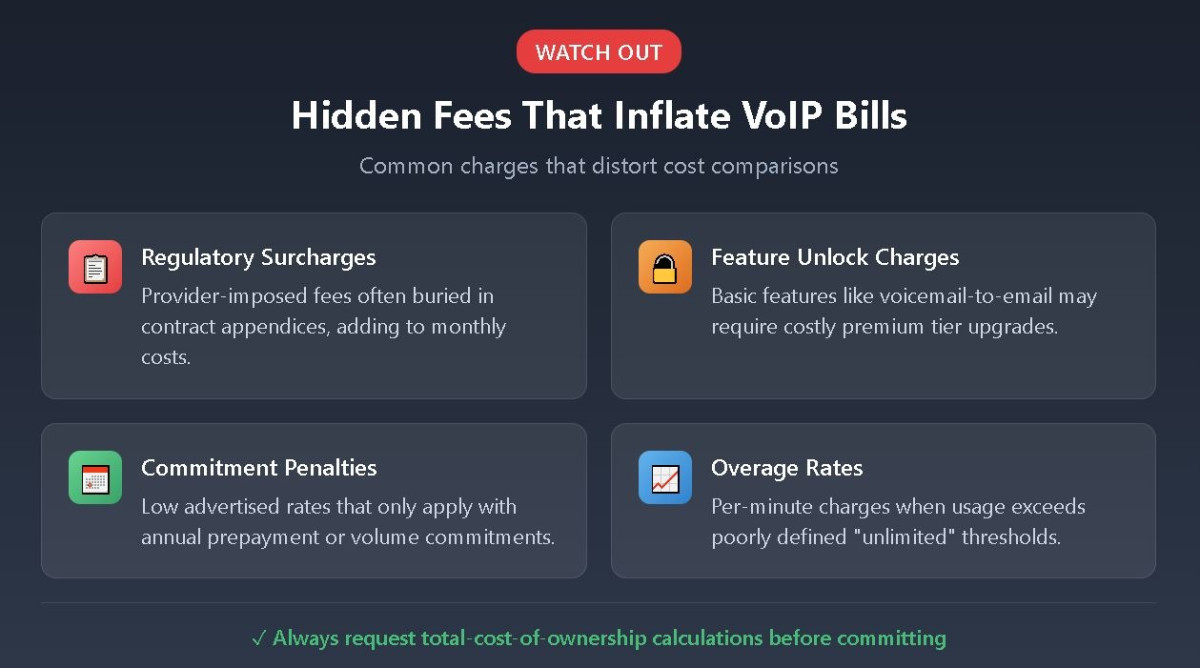
The most common hidden fees that distort VoIP cost comparison include:
-
Regulatory and compliance surcharges: These provider-imposed fees are often disclosed only in contract appendices and can increase your monthly expenses.
-
Feature unlock charges: Basic capabilities like voicemail-to-email, call recording, or auto-attendants may require premium tier upgrades.
-
Minimum commitment penalties: Some providers advertise low rates that only apply with annual prepayment or volume commitments.
-
Overage rates: Per-minute charges that kick in when usage exceeds poorly defined “unlimited” thresholds.
These variables make apples-to-apples comparison difficult. A provider advertising a lower per-channel rate may cost more than a competitor with higher advertised pricing once all fees are included. The only reliable approach is to request sample invoices or total-cost-of-ownership calculations from each provider under consideration.
What Makes SIP.US Different in Business Phone Pricing?
SIP.US built its service around the premise that business phone pricing should be predictable and comprehensible. The company publishes its complete pricing structure on its website, including channel rates, DID costs, and add-on services, allowing potential customers to calculate their expected monthly expense before any sales conversation.
The service operates on a prepaid, month-to-month basis with no setup fees and no long-term contracts. Businesses can add or remove channels through a self-service control panel without waiting for sales approval or incurring change fees. This flexibility benefits seasonal businesses or growing companies whose communication needs fluctuate throughout the year.
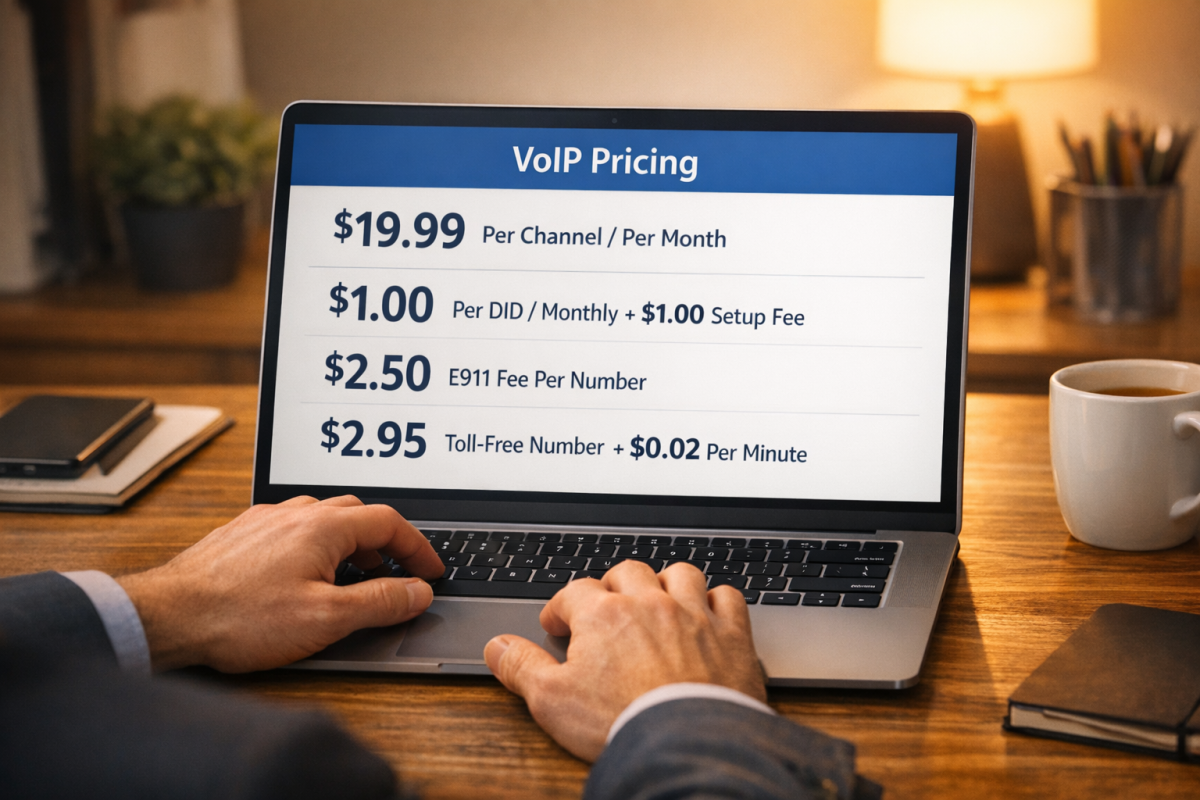
Each unlimited SIP channel includes domestic calling to the contiguous United States and Canada without per-minute charges or hidden usage limits. DIDs start at $1.00 monthly with a $1.00 setup fee, and the company clearly discloses costs for enhanced features like nomadic e911 ($2.50 monthly per number) and toll-free numbers ($2.95 monthly plus $0.02 per minute). This straightforward pricing approach eliminates the common frustration of receiving bills that bear no resemblance to advertised rates.
How Should Small Businesses Evaluate the Best SIP Pricing in the USA?
Finding the best SIP pricing requires looking beyond advertised rates to understand the total cost of ownership and value delivered. The lowest headline price often comes with trade-offs in reliability, call quality, or customer support that cost more in the long run through lost productivity and customer frustration.
Questions to Ask Any Provider
Before committing to a SIP trunk provider, business owners should request clear answers to several key questions:
-
What is the all-in monthly cost per channel, including all fees and surcharges?
-
Are there minimum volume commitments or long-term contract requirements?
-
What features are included in the base price versus available as paid add-ons?
-
How are channel upgrades and downgrades handled, and what fees apply?
-
What redundancy and failover capabilities protect against service outages?
Providers willing to answer these questions directly, with documentation, demonstrate the transparency that leads to successful long-term vendor relationships. Those who deflect or require extended sales processes to reveal basic pricing information are signaling that their billing practices may not withstand scrutiny.
The process of comparing SIP trunk providers should include trial periods whenever possible. Most reputable providers offer free trials that allow businesses to test call quality, evaluate the control panel interface, and verify that advertised features work as expected before committing budget dollars.
Frequently Asked Questions
What is the typical cost range for SIP trunk provider pricing? Most SIP trunk providers charge between $15 and $25 per channel monthly for unlimited domestic calling plans. Metered plans typically cost $0.01 to $0.03 per minute for businesses with lower call volumes. Total monthly costs depend on the number of channels needed, DID telephone numbers, and optional features selected.
How can I identify hidden fees when comparing VoIP providers? Request a sample invoice or total-cost-of-ownership breakdown from each provider before making a decision. Ask specifically about regulatory surcharges, setup fees, number porting costs, E911 charges, and any minimum commitment requirements. Transparent providers publish this information on their websites without requiring sales conversations.
Why do some SIP providers advertise “unlimited” plans that still have usage limits? Some providers use “unlimited” to describe calling within certain geographic areas while applying per-minute charges for other destinations, or they impose soft caps on concurrent calls or monthly minutes. Always clarify exactly what “unlimited” includes and request documentation of any usage thresholds that might trigger additional charges.
Take Control of Your Communication Budget
The telecommunications industry’s complexity serves providers who benefit from customer confusion. Small businesses deserve better: clear pricing that allows accurate budgeting, flexible terms that adapt to changing needs, and honest vendor relationships built on mutual benefit rather than contractual entrapment.
Transparent SIP trunk provider pricing exists for businesses willing to demand it. By asking the right questions, comparing total costs rather than headline rates, and selecting vendors who publish their complete pricing publicly, small business owners can capture the substantial savings that modern VoIP technology makes possible without the billing surprises that undermine those benefits. SIP.US has built its reputation on straightforward pricing and reliable service for businesses that value both.


Contact Information:
SIP.US
12725 Morris Rd Suite 420
Alpharetta, GA 30004
United States
Mark Amick
https://www.sip.us/
