New data from 600 families suggests anxiety-driven nighttime monitoring may be contributing to fragmented sleep among adults
ST.CHARLES, MO, UNITED STATES, April 10, 2026 /EINPresswire.com/ — A majority of U.S. parents report waking during the night to check on their children, according to a national survey of 600 parents conducted in April 2026.
The findings suggest that nighttime monitoring behaviors are both widespread and frequent—and may be contributing to sleep disruption among adults.
Key Findings,
57% of parents report waking every night to check on their child
77% report waking at least several times per week
79% report experiencing anxiety related to their child’s safety or well-being during sleep
80% report physically entering their child’s room to check on them
Nearly 60% report checking on their child multiple times per night
More than half report losing at least 30 minutes of sleep per night due to checking behaviors
Approximately 20% report losing one hour or more of sleep nightly
Anxiety Identified as Primary Driver of Nighttime Disruption
The data indicate that nighttime checking is driven predominantly by parental concern rather than a child’s immediate behavior or medical need.
Nearly four in five parents reported some level of anxiety related to a child’s safety during sleep, with higher rates observed among younger parents. Despite the availability of monitoring technologies, most respondents reported relying on physical checks rather than digital tools.
Approximately 80% of parents reported entering a child’s room as their primary method of reassurance, while fewer reported using monitors or mobile applications.
This gap between available technology and observed behavior suggests that existing solutions may not fully address the underlying need for reassurance.
“The findings indicate that nighttime checking is not an occasional behavior—it is a routine pattern for many families,” said Gary Kellmann, CEO of OZI Sleep. “The frequency of these interruptions raises questions about how parental sleep is being affected over time.”
Public Health Context,
The findings emerge alongside broader concerns about sleep sufficiency in the United States.
The National Sleep Foundation’s 2026 Sleep in America poll reports that nearly 44% of children are not getting the recommended amount of sleep. At the same time, the Centers for Disease Control and Prevention defines fewer than seven hours of sleep per night for adults as short sleep duration, which has been associated with increased risk of chronic conditions including cardiovascular disease, diabetes, and depression.
Research published in the journal Sleep has also linked repeated nighttime awakenings—known as sleep fragmentation—to impairments in cognitive performance, emotional regulation, and immune function.
Taken together, these findings suggest that repeated nighttime checking behaviors may contribute to a form of sleep fragmentation among parents, with potential long-term health implications.
Industry Response: Shift Toward Passive Monitoring Technologies
The survey results highlight a growing area of focus within the sleep technology and digital health sectors: passive monitoring systems designed to operate without requiring active user interaction.
Unlike traditional wearable devices, these systems aim to collect physiological data—such as heart rate, breathing patterns, and movement—without requiring users to attach sensors or manually initiate tracking.
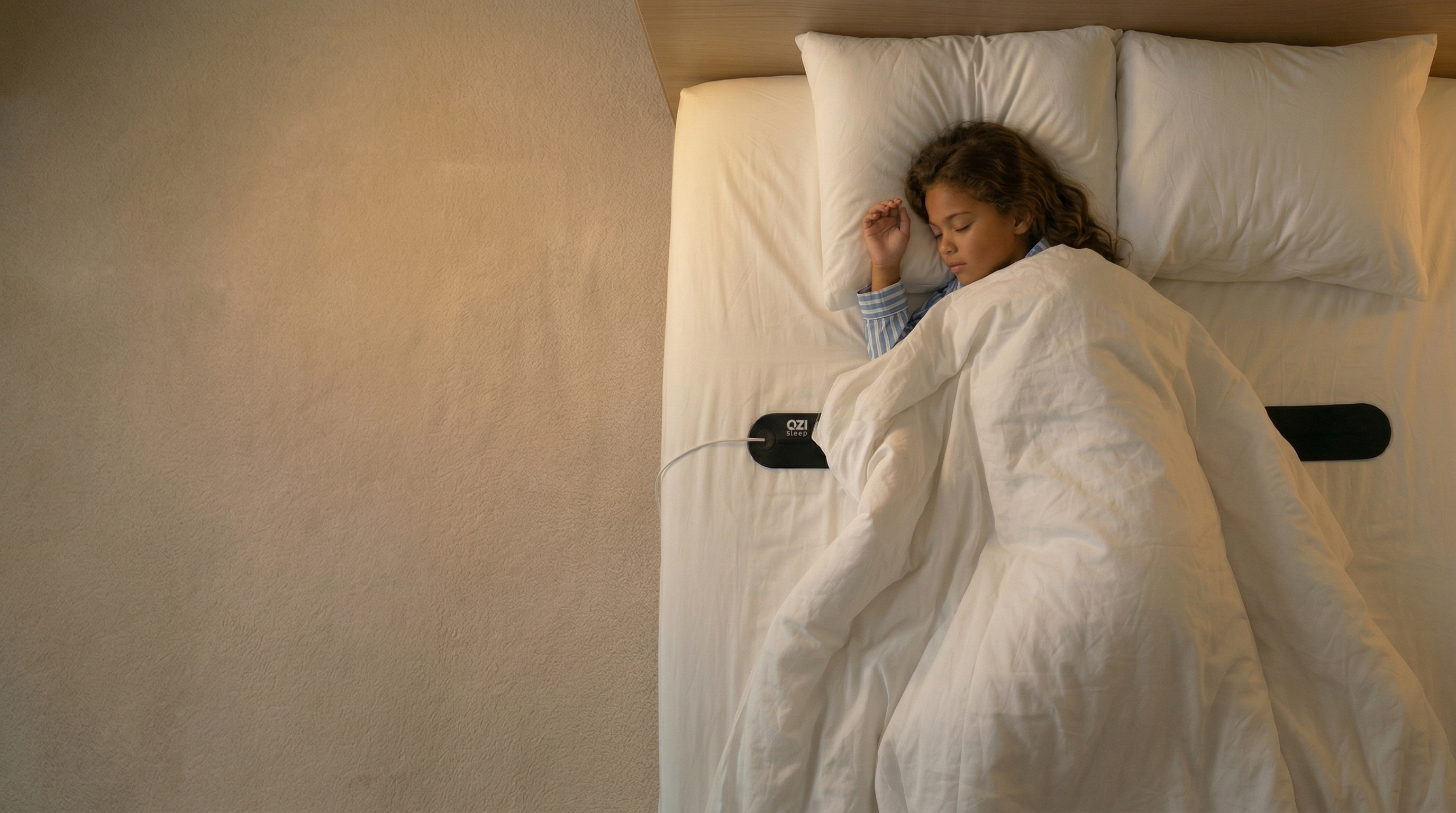
One example is the OZI Sleep Tracker, an under-the bedsheet sensor system designed to monitor sleep-related activity in real time. According to the company, the system provides optional alerts based on movement or changes in biometric patterns, and includes a haptic feedback feature intended to translate heartbeat data into a tactile signal.
“Much of the sleep technology market has focused on measuring performance,” Kellmann said. “There is increasing interest in tools that provide information passively, particularly in situations where users are seeking reassurance rather than optimization.”
Broader Implications for Caregiving,
While the survey focused on parents of children under 18, similar monitoring behaviors have been observed in other caregiving environments.
Family caregivers supporting aging adults, as well as staff in assisted living settings, often perform routine overnight checks to confirm safety and well-being. As a result, interest in passive monitoring technologies may extend beyond parenting into broader caregiving applications.
About the Survey,
The OZI Sleep Parent Survey was conducted in April 2026 using Pollfish and included responses from 600 U.S. parents with at least one child under the age of 18. The survey measured frequency of nighttime checking, anxiety levels, checking behaviors, and sleep disruption.
About OZI Sleep,
OZI Sleep is a U.S.-based health technology company focused on non-touch sleep monitoring systems designed for families and caregivers. Its technology uses under-bedsheet sensors to track heart rate, breathing, and movement during sleep.
To learn more about this non touch sleep system go to ozisleep.com
For More Information:
Mike Milesi, VP Communications
Ozi Sleep a subsidiary of zPODS Holdings
+1 314-266-9521
mike@ozisleep.com
Visit us on social media:
Instagram
Facebook
YouTube
TikTok
X
Introduction to the Ozi Sleep Tracker
Legal Disclaimer:
EIN Presswire provides this news content “as is” without warranty of any kind. We do not accept any responsibility or liability
for the accuracy, content, images, videos, licenses, completeness, legality, or reliability of the information contained in this
article. If you have any complaints or copyright issues related to this article, kindly contact the author above.

Media gallery