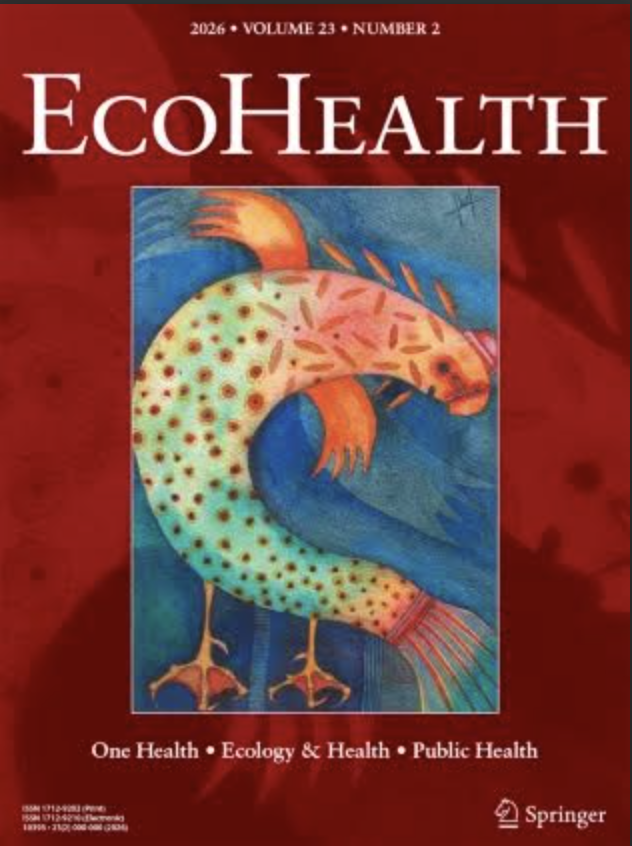

SAN FRANCISCO, CA, UNITED STATES, July 15, 2026 /EINPresswire.com/ — An international team of researchers from the US, Poland, and Italy has worked together to clarify how climate change affects urban rat populations, showing that the relationship is more complex than commonly assumed.
In a new publication in Nature Health Global’s peer-reviewed journal EcoHealth, the researchers show why warming has little effect on rat numbers in cities that are already warm. But in cold temperate cities like New York City, Chicago, or Berlin, warmer winters can boost rat activity by reducing the cold-season constraints that normally keep them confined to burrows. Those increases don’t last, however. Once rat numbers rise, competition, food limitation, predation and disease push populations back down — sometimes resulting in a population crash.
The full study is available in EcoHealth: https://rdcu.be/ftUke
Instead, the authors argue that warm-temperate cities such as Vancouver, San Francisco, or London, should prepare for a different climate driven risk, such as the expansion of arthropod vectors. As warming temperatures allow fleas, ticks, mites and other vectors to expand their ranges, the rats already present in these cities may become reservoirs for a greater diversity of pathogens. Tropical cities such as Singapore or Hong Kong may not experience rodent population changes at all, unless typhoons or flooding accompany warming.
Lead author and senior research scientist Dr. Michael H. Parsons of the Centre for Urban Ecological Solutions explains: “The narrative that climate change is causing widespread rat increases may do more harm than good by diverting warm weather cities from the real concerns they should be preparing for”.
The authors caution that the popular idea of climate-driven “rat explosions” can mislead policymakers and the public. By challenging this assumption, the study shifts attention to the climate-linked risks cities are actually more likely to face, many of which have received comparatively little attention.
Senior author, Prof. Rafał Stryjek of the Polish Academy of Sciences and the international, urban ecological thinktank, EUREKA, adds: “Effective urban risk planning depends on understanding regional differences rather than assuming a single global pattern.”
Parsons concludes: “Ultimately, human social hygiene remains the strongest predictor of rats.”
Funding:
This project was supported by EUREKA, an international applied urban ecological think tank based in San Francisco.
Direct correspondence to:
Dr. Michael H. Parsons Centre for Urban Ecological Solutions (CUES) Houston, Texas Parsons.HMichael@gmail.com
Press inquiries:
Contact Dr. Michael H. Parsons Parsons.HMichael@gmail.com
About EUREKA:
EUREKA is an applied urban ecological think tank based in San Francisco, focused on applied research in urban wildlife, ecological solutions, and public facing science. Bringing together industry partners, rodentologists, and public health professionals, EUREKA advances data driven, ecologically based rodent management and supports science-based solutions for urban wildlife, public health, and sustainable pest management. https://eurekalliance.org/
Dr. Michael H. Parsons
Centre for Urban Ecological Solutions (CUES)
email us here
Visit us on social media:
LinkedIn
Bluesky
Other
Legal Disclaimer:
EIN Presswire provides this news content “as is” without warranty of any kind. We do not accept any responsibility or liability
for the accuracy, content, images, videos, licenses, completeness, legality, or reliability of the information contained in this
article. If you have any complaints or copyright issues related to this article, kindly contact the author above.

Media gallery