

Key Takeaways
- AI tools like ChatGPT typically surface only one to three local businesses per query – making visibility a winner-take-few situation for med spas.
- Three core trust signals drive AI recommendations: review quality and volume, structured website architecture, and external authority through PR and citations.
- NAP consistency – your Name, Address, and Phone number matching exactly across every online listing – is a foundational and highly impactful factor for AI visibility.
- Authority Panda’s MultiCasting system is designed to help medical practices build the kind of broad, cross-platform presence that AI tools pull from when forming recommendations.
- Most practices haven’t started optimizing for AI recommendations yet – getting ahead now creates a compounding advantage similar to early SEO movers.
AI Recommends a Few Med Spas – or Skips Local Results Entirely
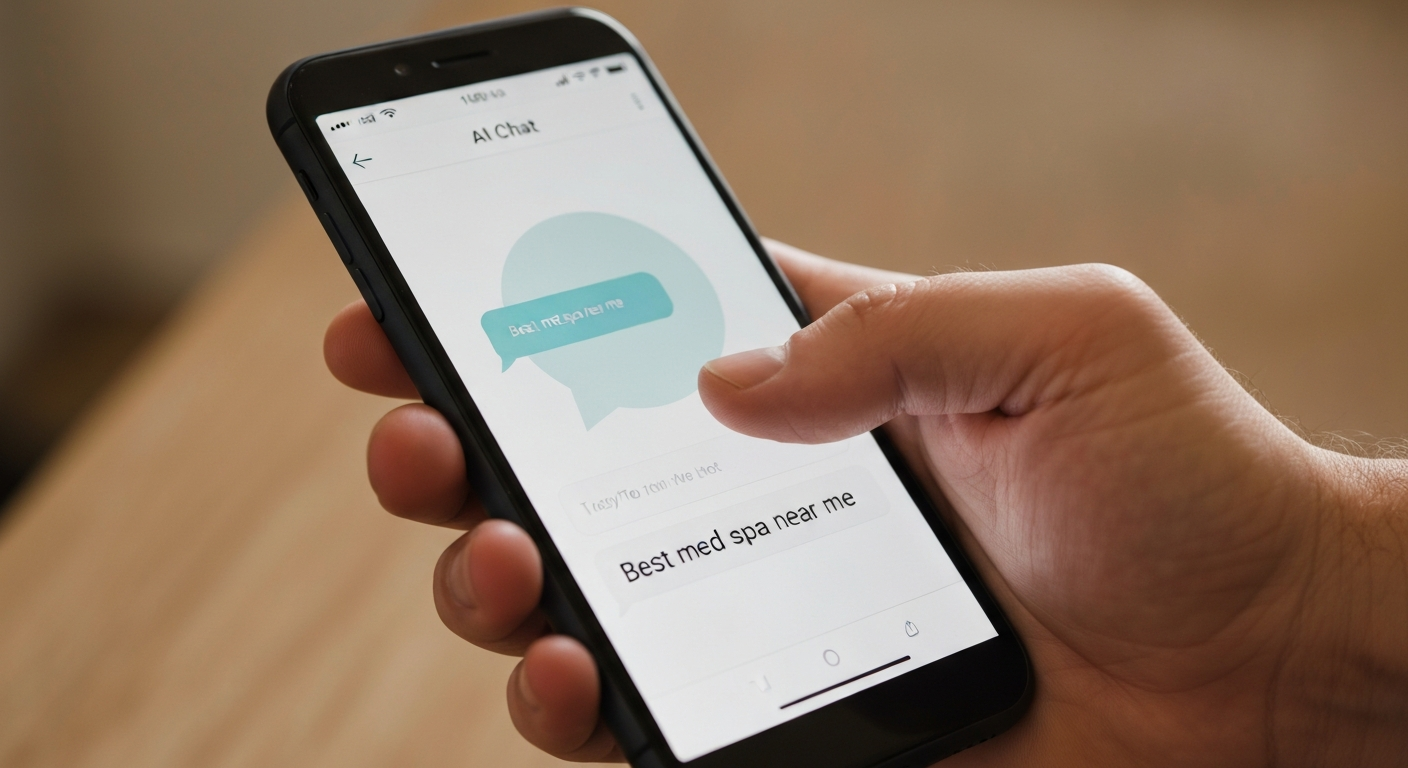
Something has quietly shifted in how patients find medical practices. Instead of scrolling through a long list of Google results, a growing number of people are typing questions directly into AI assistants – ChatGPT, Perplexity, Google’s AI Overviews, Gemini – asking things like “Where should I get Botox in [city]?” or “Best med spa near me.”
These tools don’t return ten blue links. They return one to three named businesses, sometimes fewer. If a practice doesn’t make that short list, it’s effectively invisible to that entire segment of research – no matter how good the actual treatments are or how polished the Instagram feed looks.
This is the new reality for med spa marketing, and most practices haven’t adjusted their strategy for it yet. Authority Panda works specifically with medical practices to build the kind of consistent, cross-platform credibility that gets businesses named – not skipped – when AI tools answer patient questions.
Why Most Practices Stay Invisible to AI
A strong Google Ads campaign or an active Instagram account isn’t enough for AI visibility. The way AI tools evaluate businesses is fundamentally different from how a paid ad auction works.
AI Reads Across Many Sources at Once
Before naming a business, AI assistants cross-reference multiple data points simultaneously: Google Business Profile, Maps listings, review platforms, health and beauty directories, news mentions, podcasts, and the practice’s own website. A practice that only shows up on one channel – even if it shows up well – looks thin to an AI system trained to identify patterns across many independent sources.
A practice with 400 Google reviews, a well-structured website, and mentions in three local publications looks far more credible to an AI than one with 4,000 Instagram followers and nothing else.
Medical Content Faces a Higher Trust Bar
Aesthetic treatments are medical in nature. AI tools apply a higher standard before recommending practices in this space – actively favoring sources that appear medically supervised, clearly credentialed, and free of exaggerated or unverifiable claims. Practices with named providers, real credentials listed, and treatment-specific content read as trustworthy. Generic or vague content gets filtered out.
Trust Signal #1: Reviews That Prove Real Results
Reviews are the most direct signal AI tools use to confirm that a business delivers what it claims. The pattern matters as much as the total count.
Volume, Recency, and Consistency All Count
AI systems process review content for tone, keywords, and sentiment – and they look at the full picture. A practice with 300 reviews accumulated over five years and no recent activity looks stagnant. Based on observed AI search behavior for med spas, a range of 150-300+ total reviews with a steady cadence of new reviews each week is where AI tools tend to treat a business as reliably active – though these thresholds can vary by market and platform.
Responding to reviews matters too. Consistent, thoughtful responses signal an engaged, operating business – something AI tools read as a real-world activity signal.
Detailed Reviews Help AI Connect You to Specific Treatments
Generic five-star reviews carry less weight than reviews that mention specific treatments by name. When a patient writes about their HydraFacial results or their six sessions of laser hair removal, that language gives AI systems concrete, matchable signals about what the practice is known for.
Prompting patients to describe their experience in detail – tactfully, within platform guidelines – pays dividends well beyond the review itself. Those specific keywords feed directly into how AI tools match a practice to patient queries.
Trust Signal #2: Website Architecture AI Can Parse
A visually appealing website differs from an AI-readable one. Structured data and technical consistency allow AI crawlers to understand what a practice offers – and where it’s located.
Schema Markup Tells AI Exactly What You Offer
Schema markup is a type of code added to website pages that labels information in a way search engines and AI tools can interpret directly. For med spas, implementing LocalBusiness, MedicalBusiness, Service, and FAQPage schema across relevant pages gives AI crawlers a structured map of the practice – what it is, what it treats, where it’s located, and what patients ask about it.
Dedicated service pages reinforce this further. A standalone page for lip filler, another for laser resurfacing, another for body contouring – each with pricing ranges, session counts, candidacy criteria, and FAQ sections – gives AI tools the treatment-level specificity they need when matching patient questions to local providers.
NAP Consistency Across Every Listing
NAP stands for Name, Address, Phone number. It sounds basic, but it’s one of the most commonly broken signals for local businesses. If the practice name appears as “Glow Med Spa” on Google, “Glow Medical Spa LLC” on Yelp, and “Glow Spa” on Facebook, AI systems see three different entities – not one authoritative business.
Data accuracy and consistency across all online listings – Google Business Profile, Apple Maps, Yelp, Bing, Facebook – is widely cited as a foundational and highly impactful AI ranking factor for local businesses, alongside review quality, structured data, and overall entity authority. Audit every listing and make them identical.
Trust Signal #3: External Authority and PR
Reviews and website structure tell AI tools what a practice says about itself. External citations tell AI what others say about it – and that independent validation carries serious weight.
Where AI Looks for Independent Validation
External authority signals include mentions in local news outlets, features in health or lifestyle publications, guest appearances on podcasts, citations on industry sites, and backlinks from reputable domains. Each mention functions as a third-party voucher – evidence that the practice exists and has been recognized beyond its own marketing channels.
National media coverage isn’t required. A quote in a local lifestyle magazine, a guest spot on a city wellness podcast, or a feature on a regional health blog all contribute to the citation footprint AI tools use to assess trustworthiness. For practices in the medical space, a listing on platforms like Healthgrades, RealSelf, or Zocdoc also functions as an authority signal – especially when the profile is complete and actively maintained.
Your Google Business Profile Is the Foundation
Before any of the above efforts compound, Google Business Profile needs to be fully built out. This is where AI tools begin when evaluating a local medical practice, and a thin or neglected profile undermines everything else.
A well-optimized profile includes all treatment categories, current hours, a complete services list with descriptions, recent photos, active Q&A responses, and weekly posts. AI-powered tools can now automate personalized review responses and generate optimized service descriptions – small improvements that collectively signal an active, trustworthy business. An unmanaged profile tells AI systems and prospective patients the same thing: nobody’s home.
MultiCasting: Building Consistent Visibility Across Platforms
Fixing a Google Business Profile and adding schema markup are strong first steps. But AI tools pulling recommendations from dozens of sources reward practices that show up across those sources – not just on one or two.
Diverse Content Formats, One Coherent Presence
This is the principle behind MultiCasting – a content approach that creates material in multiple formats and distributes it across platforms simultaneously. The goal is to build the kind of cross-referenced, multi-source presence that AI systems read as genuine authority.
According to Authority Panda, their MultiCasting system produces content across eight formats each month – news articles, blog posts, short and long-form video, podcasts, infographics, social posts, and flipbooks – then distributes them across 300+ platforms including Google News, YouTube, Spotify, Apple Podcasts, and channels that the company says directly influence how AI tools like ChatGPT compile their recommendations. Authority Panda’s own research indicates that 93% of buyers research across multiple platforms before making a decision, and 73% of that research now happens on modern discovery platforms: YouTube, social, AI tools, and podcasts – rather than traditional Google search alone.
For a med spa, this means a potential patient might encounter the practice through a podcast mention, see a short video on YouTube, read a news article, and find consistent reviews on Google – all before typing a single search query. By the time they ask ChatGPT for a recommendation, the practice already looks like the obvious, well-documented choice.
Be the Obvious Choice Before Your Competitors Are
AI recommendations are already shaping patient decisions today, and the share of consumer searches happening through AI assistants is expected to grow significantly through 2026. Practices that build broad, consistent, credible visibility now are positioning themselves to become the default recommendation in their market – the same compounding advantage that early SEO movers enjoyed over the following decade.
The three trust signals – reviews, website architecture, and external authority – aren’t complex in theory. Executing them consistently, across every relevant platform, while also running a medical practice, is where most owners fall short. Starting with a full audit of NAP consistency, Google Business Profile completeness, and current review velocity gives a clear picture of where the gaps are. Closing those gaps, methodically and across multiple channels, is what turns a practice from invisible to recommended.
For med spas ready to build this kind of compounding, AI-ready presence without relying on paid ads, Authority Panda’s MultiCasting service offers a done-for-you system built specifically to help medical practices show up everywhere patients – and AI tools – are looking.
Authority Panda
29 E Oak St
Pittston
PA
18640
United States
